
Contact Dermatitis Treatment for Itchy Skin That Works

Last Updated: October 30, 2026
Quick Summary
Contact dermatitis treatment starts with finding what touched your skin and stopping it touching you again, because creams only work once that first step is done. Most mild cases clear within two to four weeks once the trigger is removed, using gentle cleansing, emollients and cool compresses.
Note what touched your skin in the 24 to 48 hours before a rash appeared.
Patch testing confirms allergens but does not test for irritants.
Apply fragrance-free emollients at least twice daily and after every wash.
Keep the bedroom around 16 to 18°C to reduce night itching.
See a GP if the rash is not improving after a few weeks of avoidance.
Table of Contents
What Contact Dermatitis Treatment Actually Involves
Contact dermatitis treatment starts with one job: find what touched your skin and stop it touching you again. Everything else, from creams to compresses, only works once that first step is done.
Contact dermatitis is inflammation of the skin caused by direct contact with an irritant or allergen (the NHS). It shows up as a red, dry, itchy patch on the exact area that touched the trigger.
Most cases settle with avoidance plus gentle skincare. Some need a GP.
Irritant vs Allergic: Why the Distinction Changes Your Approach
The two types look similar but behave differently.
Irritant contact dermatitis happens to anyone, given enough exposure. Strong soaps, detergents, bleach and repeated hand washing strip the skin barrier. No immune reaction is involved.
Allergic contact dermatitis happens only to people sensitised to a substance. Nickel, fragrances, preservatives and certain plants are common culprits. Even a tiny amount can set it off.
Why does it matter? Irritant cases often improve fast once the harsh product goes. Allergic cases need strict allergen avoidance, because your immune system remembers. The NHS guidance on contact dermatitis sets out both types and when to seek help.
Identifying Triggers and Allergens Before You Treat
Finding the trigger is the treatment. Creams calm skin; only avoidance stops the next flare. The problem is that the trigger is rarely obvious. Most people blame the product they used last, when the real cause is often something they have used for months without issue, until sensitisation built up.
Start With a Structured Exposure Diary
A simple diary works, but only if it is specific. Note what touched your skin in the 24 to 48 hours before a rash appeared, and record the exact product name, not just "moisturiser". Include:
Soaps, shower gels, shampoos and hand washes
Washing powder, fabric conditioner and surface cleaners
Jewellery, watch straps, belt buckles and jeans buttons
Patterns usually emerge within two to three weeks. Photograph the rash and the product label each time, because memory is unreliable and labels change formulation without warning.
Patch Testing: What It Actually Involves
Patch testing is a recognised way to confirm an allergen. A dermatologist applies small amounts of common allergens to your back using adhesive patches. Readings are taken after a set period, because some reactions are delayed.
A positive result shows as a localised red, raised or blistered patch under one specific allergen. That tells you exactly what to avoid. It is widely regarded as the standard test for allergic cases and is usually arranged through a dermatology referral.
Pro Tip Patch testing does not test for irritants. If your rash is irritant contact dermatitis, the test may come back clear, that does not mean the rash is not real. It means the cause is cumulative exposure rather than an immune reaction.
Common Hidden Triggers People Miss
Some of the most frequent culprits are not obvious:
Methylisothiazolinone (MI), a preservative found in cosmetics, wet wipes and some paints. It is one of the most common causes of allergic contact dermatitis and was restricted in leave-on cosmetics, but still appears in rinse-off products and household items.
Nickel, present in jewellery, watch backs, zips, buttons, keys and even some mobile phone cases. EU nickel restrictions apply in the UK, but older or unregulated items can still release nickel.
Fragrance mix, a standard patch-test allergen covering the most common perfume ingredients. "Fragrance-free" and "unscented" are not the same thing; unscented products may still contain masking fragrance.
Why Avoidance Fails
Watch out: if you keep treating without finding the trigger, the rash returns every time you meet the same substance. Understanding which ingredients calm rather than provoke helps, and our guide to natural anti-histamine skincare ingredients explains what to look for on a label.
If avoidance and patch testing do not solve it, ask your GP about referral to a dermatologist. Persistent cases sometimes need a formal occupational assessment if the trigger is work-related.
Natural Remedies for Contact Dermatitis That Soothe Without Stinging
Most guides list the same five remedies and stop there. The gap is in the detail: how to use each one without making the rash worse, and how to build a daily routine that reduces exposure at home. That is where most people actually struggle.
Soothing Measures That Work
Cool compress. A clean cloth soaked in cool, not ice-cold, water, pressed on for 10 to 15 minutes. A cool compress can help take the edge off itching. Do not hold ice directly against the skin; it can damage an already compromised barrier.
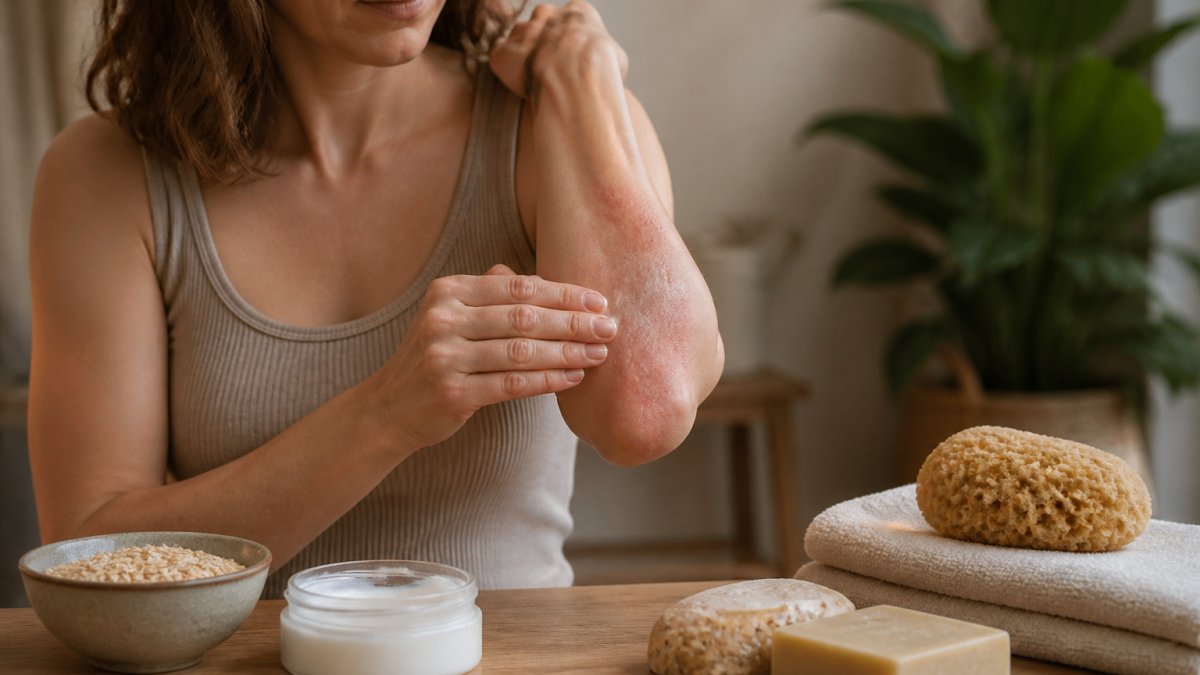
Colloidal oatmeal bath. Finely milled oats are often used to soothe irritated skin. Use lukewarm water, not hot, and pat dry rather than rubbing. Follow immediately with an emollient while the skin is still damp.
Emollients. Fragrance-free moisturisers rebuild the barrier by trapping water in the skin. Apply at least twice daily and after every wash. Ointments are thicker and better for very dry skin; creams suit daytime use; lotions are the weakest option and often contain more preservatives.
Calamine lotion. A traditional option for mild itching. It dries the skin, so follow with a moisturiser. Do not use it on broken or weeping skin.
Avoid soap on the rash. Plain water or a gentle wash can be used until the skin settles. Soap can strip the skin's natural oils, which can slow barrier repair.
These steps calm symptoms. They do not replace avoidance, and they will not fix a rash that keeps returning.
The Home Environment: What Most Guides Skip
Soothing the rash is only half the job.
Laundry. Switch to a non-biological, fragrance-free washing powder or liquid.
Fabrics. Cotton and silk are the least irritating against reactive skin.
Bedding and sleep environment. Use a cotton pillowcase and duvet cover.
Cleaning products. Wear gloves for washing up, cleaning and wet work.
Water and washing. Lukewarm showers, short duration, and a fragrance-free wash.
Key Takeaway Natural remedies soothe the skin, but the biggest gains come from reducing repeated exposure at home. A fragrance-free laundry routine, cotton bedding and a cool bedroom often do more for persistent itching than any single topical product.
If you have made these changes and the rash still returns, the trigger is likely something you have not identified yet. Go back to the exposure diary and consider patch testing.
How to Stop Dermatitis Itching at Night
Night itching is worse for a simple reason: warmth, less distraction, and the temptation to scratch. Breaking that cycle takes a routine.
Keep the bedroom cool and bedding light.
Apply a thick emollient before bed, not a thin lotion.
Wear soft cotton gloves or keep nails short to limit damage from scratching in your sleep.

If sleep is regularly broken by itching, tell your GP. Persistent sleep loss is a reason to escalate, not endure.
Repairing the Skin Barrier Step by Step
Damaged skin lets irritants in and water out. Repair follows a sequence:
Stop the assault. Remove the irritant or allergen from your routine.
Cleanse gently. Lukewarm water, fragrance-free wash, no scrubbing.
Moisturise generously and often. Emollients work best applied at least twice daily and after every wash.
Protect your hands. Gloves for washing up, cleaning and wet work.
Give it time. The barrier rebuilds over weeks, not days.
Our step-by-step guide on how to heal a damaged skin barrier goes deeper if your skin is cracked or raw.
How Long Does Contact Dermatitis Take to Heal?
Most mild cases clear within two to four weeks once the trigger is removed. Irritant rashes often settle faster than allergic ones. Allergic reactions can take longer because the immune system stays primed, and repeated exposure resets the clock.
Some people see improvement within days. Others need several weeks. If a rash is not improving after a few weeks of avoidance and gentle care, get it checked.
Healing time depends on the type of dermatitis and whether the trigger has been removed.
Situation | Typical healing time | Note |
Most mild cases | Two to four weeks | Once the trigger is removed |
Irritant rashes | Often settle faster | Than allergic rashes |
Allergic reactions | Can take longer | Immune system stays primed; re-exposure resets the clock |
Some people | Improvement within days | Others need several weeks |
Rash not improving | After a few weeks of avoidance | Get it checked |
When to See a GP or Dermatologist About a Flare-Up
Book an appointment if:
The rash is spreading or getting worse despite avoidance
Skin is broken, weeping, or showing signs of infection such as pus or increasing pain
Itching is severe enough to disturb sleep most nights
A GP can prescribe topical corticosteroids or antihistamines where appropriate. A dermatologist can run patch testing and manage stubborn cases. Do not apply strong steroid creams to the face or broken skin without medical advice.
For quick answers about our products and who they suit, our FAQs cover the common questions.
Choosing a Natural Cream for Sensitive, Reactive Skin
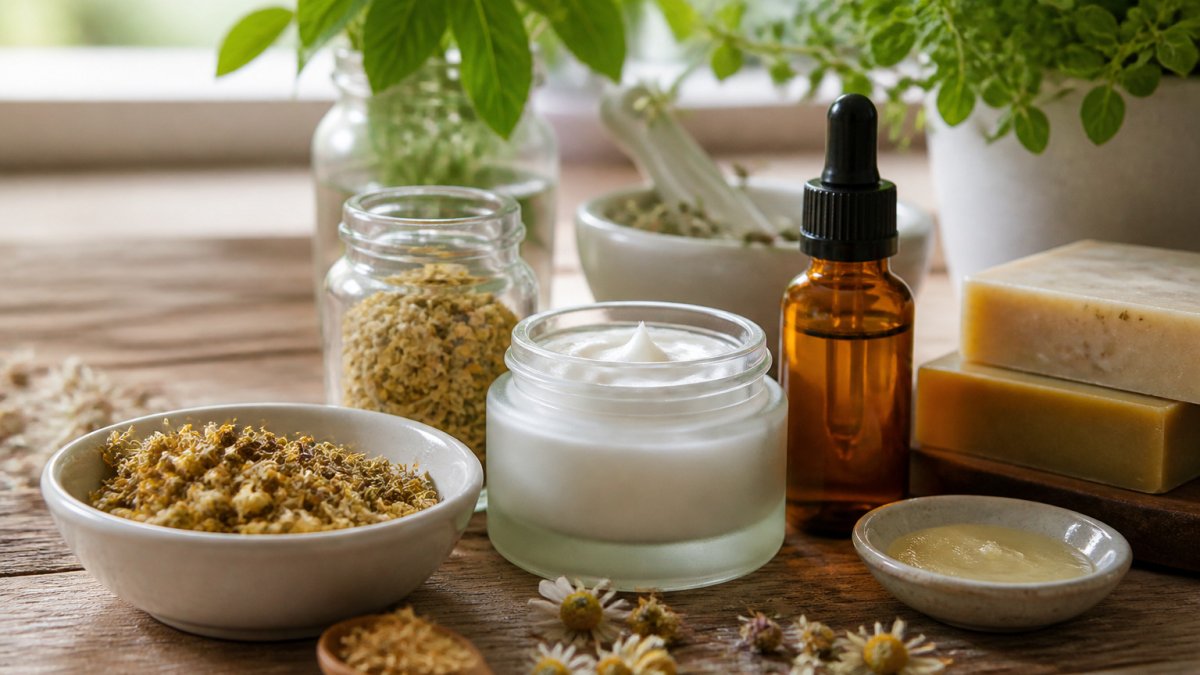
A good cream for reactive skin does three things: it moisturises, it calms inflammation, and it avoids the ingredients most likely to trigger a reaction. Fragrance-free is the starting point. Short ingredient lists help you spot problems.
Look for:
Emollients that help keep the skin moisturised
Plant-based ingredients chosen for sensitive skin
No added fragrance or drying alcohol
Clear labelling so you know exactly what you are applying
Our Broban cream is designed for common skin concerns such as eczema, acne and itching. If you are still weighing up your options, our organic skincare guide for sensitive skin walks through what to check before you buy.
Frequently Asked Questions
What is the best anti-itch cream for contact dermatitis?
The best cream depends on the reaction type. For mild irritant contact dermatitis, a fragrance-free emollient used several times a day often calms itching and supports the skin barrier. For allergic reactions with visible erythema or vesicles, a pharmacist may suggest a short course of hydrocortisone cream. Some people find natural, fragrance-free creams comfortable between flare-ups. If a patchy rash spreads or weeps, see a GP before continuing any product.
Can natural skincare help with contact dermatitis flare-ups?
Natural skincare can help, provided it is genuinely hypoallergenic and free from common allergens. Some people use colloidal oatmeal, calamine lotion or plain emollients for comfort and to keep skin moisturised. The caveat is that natural does not automatically mean safe: essential oils, fragrances and some plant extracts are themselves triggers. Choose products with short ingredient lists, check for patch testing evidence, and test any new cream on a small area for 48 hours before wider use.
How long does contact dermatitis usually last?
Mild irritant contact dermatitis often settles once the trigger is removed, while allergic contact dermatitis can take longer to clear. If the allergen is still present, the rash will keep returning. Secondary infection, marked by weeping, crusting or spreading warmth, extends healing and needs medical assessment. Track your exposure so you can tell whether the timeline is normal or a sign the trigger has not been fully removed.
When should I see a GP for contact dermatitis?
Book a GP appointment if the rash covers a large area, affects your face or genitals, or shows signs of secondary infection such as pus, crusting or increasing pain. You should also seek help if over-the-counter hydrocortisone and emollients have not helped after a week, if itching disturbs sleep most nights, or if you cannot identify the trigger. A GP can prescribe topical corticosteroids or antihistamines and refer you for patch testing at a dermatology clinic.
Finding a cream that calms rather than irritates is the challenge for anyone with reactive skin. At Dietmonger (UK) Ltd- Herbal All Skincare, we make wholly natural products with anti-inflammatory and anti-histamine properties, tested and ethically sourced, and safe for pregnant women and babies. Get started with Dietmonger (UK) Ltd- Herbal All Skincare and give reactive skin the gentle care it needs.
Comments